
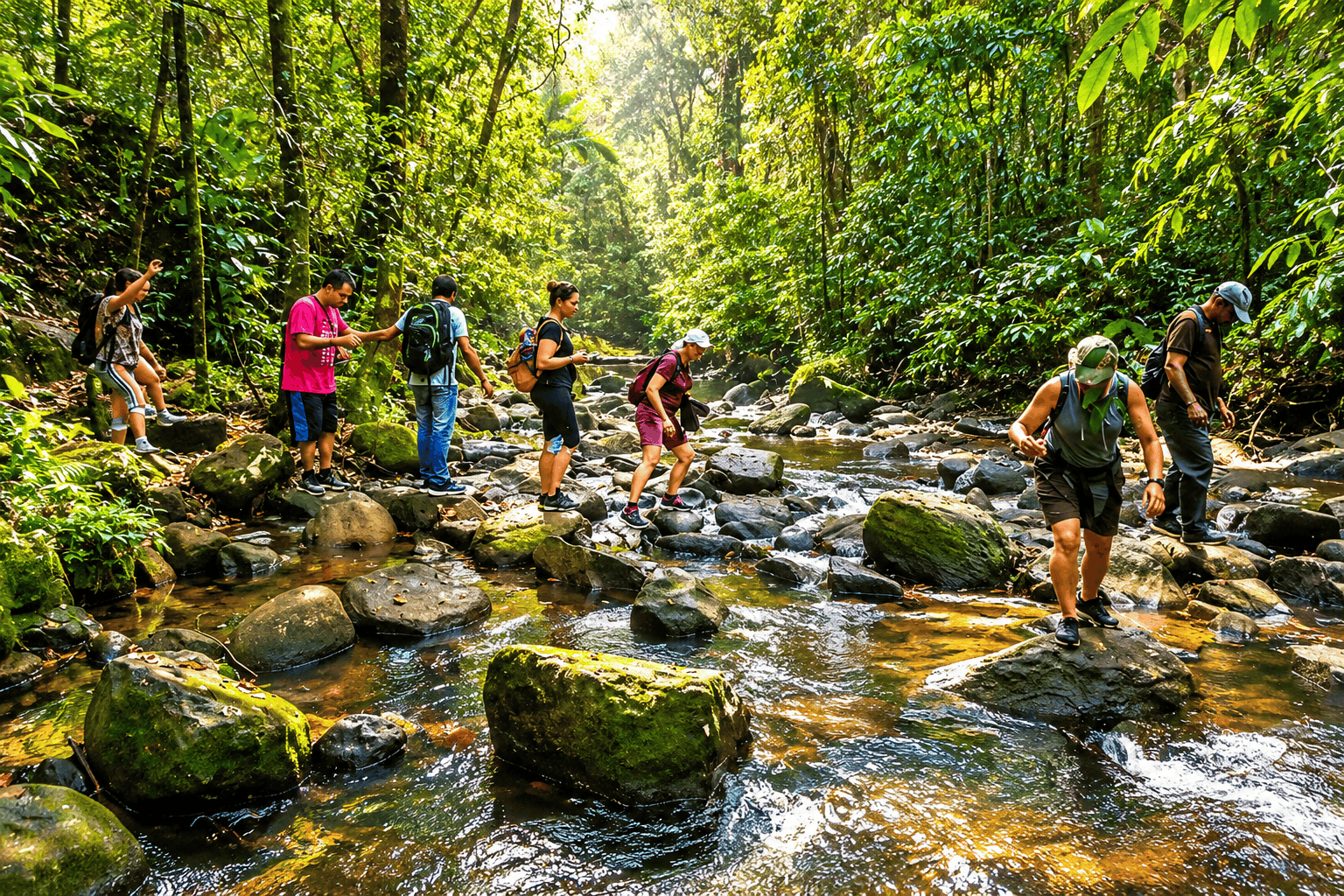
Sinharaja Forest Reserve, Sri Lanka – Complete Rainforest Travel Guide
Sinharaja Forest Reserve is one of Sri Lanka’s most important natural attractions and a must-visit destination for travellers who enjoy nature, wildlife, birdwatching and rainforest adventures. Located in the island’s south-western wet zone, this UNESCO World Heritage Site protects one of the last significant areas of primary tropical rainforest in Sri Lanka.
 Unlike the country’s famous wildlife parks, where animals can often be seen across open grasslands, Sinharaja offers a completely different experience. Visitors walk beneath a thick green canopy, follow natural forest trails, listen to birds calling from the trees and discover the incredible variety of plants and wildlife that live within this ancient rainforest.
The forest is especially famous for its endemic bird species, colourful butterflies, unusual insects, amphibians and rich plant life. It is also an excellent destination for travellers who want to experience a quieter and more natural side of Sri Lanka.
Whether you are planning a rainforest walk, a birdwatching trip, a photography adventure or a nature-focused holiday, this guide explains what to expect at Sinharaja Forest Reserve, how to get there, the best time to visit and how to prepare for your journey.
About Sinharaja Forest Reserve
Sinharaja Forest Reserve is a protected tropical rainforest in south-western Sri Lanka, spread across parts of the Ratnapura, Galle and Matara districts. The reserve is recognised internationally for its exceptional biodiversity and conservation importance.
The name Sinharaja is commonly translated as “Lion King”. The forest has a special place in Sri Lankan natural heritage and is one of the country’s most valuable remaining rainforest ecosystems.
Sinharaja was declared a UNESCO Biosphere Reserve in 1978 and became a UNESCO World Heritage Site in 1988. It is recognised as an outstanding example of a tropical rainforest ecosystem with a remarkable concentration of endemic plants and animals.
According to UNESCO, more than 60% of the tree species recorded in the reserve are endemic to Sri Lanka. The forest also supports a large proportion of the country’s endemic mammals, butterflies, birds and other wildlife. These characteristics make Sinharaja an important destination for conservation, scientific research and nature tourism.
UNESCO World Heritage Centre+1
What makes Sinharaja Forest Reserve special?
The main reason to visit Sinharaja is its extraordinary natural environment. The forest is not simply a collection of trees; it is a complex ecosystem containing different layers of vegetation, streams, valleys, ridges and countless forms of wildlife.
One of the most interesting features is the dense rainforest canopy. Tall trees form a natural roof above the forest floor, allowing sunlight to enter through small openings. Ferns, mosses, vines, orchids and other plants grow in the humid conditions beneath the trees.
The forest receives rainfall throughout the year, helping maintain its rich vegetation. Numerous streams flow through the valleys, creating a cool and peaceful atmosphere in many parts of the reserve.
Sinharaja is particularly famous for its endemic birdlife. Several bird species found here are difficult to see elsewhere, making the reserve one of the country’s most important birdwatching destinations.
Another special feature is the mixed-species bird flock. Different bird species sometimes move together through the forest in search of food. With the help of an experienced guide, visitors may have the opportunity to observe several species within a relatively short period.
The history and conservation of Sinharaja
Sinharaja has a long history of ecological and cultural importance. Local communities have traditionally depended on forest resources such as medicinal plants and kitul palms. However, forest exploitation and commercial logging created serious threats to the rainforest.
Conservation efforts became increasingly important during the twentieth century. Logging activities were stopped in the late 1970s following pressure from conservationists and environmental organisations.
The forest’s international recognition as a Biosphere Reserve in 1978 and a UNESCO World Heritage Site in 1988 strengthened its importance as a protected natural area.
Today, Sinharaja is protected because of its outstanding biodiversity and ecological value. Visitors play an important role in supporting responsible nature tourism by following forest regulations, avoiding littering and respecting wildlife.
What visitors can expect
A visit to Sinharaja is different from a traditional sightseeing tour. You should not expect wide roads, open landscapes or guaranteed wildlife sightings. Instead, the experience is about exploring a natural rainforest environment on foot.
Visitors can expect:
-
Walking through dense tropical rainforest.
-
Listening to endemic and other forest birds.
-
Looking for colourful butterflies and insects.
-
Discovering native trees, plants, ferns and orchids.
-
Following natural trails through hills and valleys.
-
Exploring streams and selected waterfall areas where access is permitted.
-
Learning about rainforest ecology from a knowledgeable guide.
-
Photographing the natural landscape and wildlife.
The forest can be humid, muddy and slippery, particularly after rainfall. This is part of the natural rainforest environment, so comfortable walking shoes and suitable clothing are essential.
Main entrances to Sinharaja Forest Reserve
Sinharaja has several access points, and choosing the correct entrance is important when planning your visit. The main approaches include Kudawa, Pitadeniya, Morningside and other southern access routes.
Kudawa Entrance
Kudawa is one of the best-known entrances and is commonly used by visitors approaching from the Kalawana and Ratnapura side. It is a popular choice for rainforest walks and birdwatching.
Pitadeniya Entrance
Pitadeniya is located on the southern side of the reserve near Deniyaya. It is a useful access point for travellers coming from Matara, Galle and the southern coastal region.
Morningside Entrance
Morningside provides access to a different forest environment on the eastern side of Sinharaja. The area is known for its higher-elevation forest characteristics. Road conditions can be challenging, so check local access arrangements before travelling.
Lankagama and other southern approaches
Some southern approaches are used by visitors interested in rainforest scenery, streams and waterfalls. Access conditions and available trails can vary, so confirm the current arrangements with local authorities or your guide.
The entrances are not interchangeable. Driving from one side of the reserve to another can take several hours because visitors generally need to travel around the forest rather than walk through it from gate to gate. Choose your entrance based on your starting location and the experience you want.
Things to Do at Sinharaja Forest Reserve
Sinharaja offers a range of nature-based activities for visitors. Most experiences involve walking through the forest with a guide, observing wildlife and discovering the rainforest ecosystem.
The time required depends on the entrance, selected trail, weather and fitness level of your group. The following activities are useful options when planning your visit.
1. Explore the rainforest walking trails
Walking through the rainforest is the main activity at Sinharaja. The trails take visitors beneath tall trees, past thick vegetation and along natural forest paths.
During the walk, you can observe different layers of rainforest vegetation, including large trees, climbing plants, ferns, mosses and smaller plants growing on tree trunks.
Some trails are relatively manageable, while others include steep sections, uneven ground and muddy paths. Your guide can help you select a route suitable for your fitness level.
Suggested time: 2–4 hours for a standard rainforest walk. Longer walks may require half a day or more.
2. Go birdwatching
Sinharaja is one of Sri Lanka’s most important birdwatching locations. The reserve is particularly well known for endemic birds and mixed-species feeding flocks.
Birdwatchers may look for species such as the Sri Lanka blue magpie, red-faced malkoha, Sri Lanka junglefowl, Sri Lanka white-headed starling and green-billed coucal.
Wildlife sightings are never guaranteed. Birds may remain hidden within thick vegetation, and some species are easier to identify by their calls than by sight.
An experienced birdwatching guide can help visitors recognise bird sounds, identify species and find suitable observation points.
Early morning is generally a good time for birdwatching because forest birds are often active during the first hours of daylight.
Suggested time: 2–4 hours for a focused birdwatching walk. Dedicated birdwatchers may prefer a full-day visit.
3. Discover endemic plants and trees
Sinharaja is an excellent destination for travellers interested in tropical plants and forest ecology.
The reserve contains a remarkable variety of native trees and woody climbers. Many species are endemic to Sri Lanka, meaning they naturally occur nowhere else in the world.
During a guided walk, you can learn about different tree species, forest layers, medicinal plants, vines and other vegetation.
Your guide may also explain how plants adapt to the humid rainforest environment and how different species depend on one another.
Suggested time: 1–2 hours as part of a rainforest walk.
4. Observe butterflies and insects
Sinharaja is home to many butterfly and insect species. The forest’s warm, humid conditions and diverse vegetation provide suitable habitats for a wide range of small wildlife.
Look carefully around flowering plants, damp ground, streams and forest clearings. You may notice butterflies resting on leaves or insects moving through the vegetation.
Some insects are extremely small and difficult to notice without looking carefully. A guide can help identify interesting species and explain their role in the ecosystem.
Suggested time: 30–60 minutes, usually included in a longer forest walk.
5. Visit streams and natural water features
Streams are an important part of the Sinharaja ecosystem. Water flows through the forest valleys and supports the plants and animals living in the reserve.
Depending on the entrance and permitted trail, visitors may be able to explore selected streamside areas and natural water features.
The sound of flowing water creates a peaceful atmosphere, and these locations can offer interesting opportunities for nature photography.
Be careful around wet rocks and stream banks. Water levels can rise after heavy rainfall, so always follow your guide’s instructions.
Suggested time: 30–60 minutes, depending on the trail and access.
6. Explore waterfall areas
Some approaches to the Sinharaja region provide access to waterfalls and scenic water features. These are popular with visitors who want to combine rainforest trekking with natural scenery.
The availability of waterfall visits depends on the entrance, local conditions and permitted routes. Do not assume that every waterfall is accessible from every entrance.
Avoid climbing slippery rocks or entering deep water, especially after rain. Follow local safety instructions and respect restrictions around sensitive areas.
Suggested time: 1–2 hours, depending on the location and walking distance.
7. Enjoy rainforest photography
Sinharaja provides many opportunities for nature photography. The forest canopy, unusual plants, colourful birds, butterflies, streams and natural light create interesting subjects.
Photography can be challenging because the forest is often shaded. A camera with good low-light performance or a lens suitable for wildlife photography can be helpful.
For bird photography, a telephoto lens is useful. For close-up nature photography, a macro lens can help capture insects, leaves and small plants.
Avoid using flash when photographing wildlife if it may disturb animals. Never damage plants or move wildlife to create a better photograph.
Suggested time: 1–3 hours, depending on your photography interests.
8. Learn about rainforest conservation
Sinharaja is more than a tourist attraction. It is a protected ecosystem that plays an important role in Sri Lanka’s biodiversity and environmental health.
A guided visit can help you understand why rainforest conservation matters, how endemic species depend on their habitats and why human activities must be carefully managed.
You may learn about the importance of forest protection, water resources, native vegetation and the relationship between local communities and the natural environment.
Suggested time: 30–60 minutes as part of a guided visit.
How much time should you spend at Sinharaja?
For most travellers, a half-day visit is a practical starting point. However, visitors who enjoy birdwatching, photography or longer nature walks may benefit from spending a full day in the area.
| Type of visit | Suggested time |
|---|---|
| Short rainforest walk | 1.5–2 hours |
| Standard guided forest walk | 2–4 hours |
| Birdwatching experience | 3–5 hours |
| Rainforest and waterfall visit | 4–6 hours |
| Full nature and photography experience | 6–8 hours |
If you are travelling from another part of Sri Lanka, consider staying overnight near your chosen entrance. This allows you to begin your forest walk early without making a long journey on the same morning.
Getting to Sinharaja Forest Reserve from the Airport
Sinharaja Forest Reserve is located in the south-western part of Sri Lanka. Travellers arriving at Bandaranaike International Airport (CMB) can reach the reserve by private vehicle, taxi or a combination of public transport services.
The exact distance and journey time depend on which entrance you plan to visit. Kudawa and Pitadeniya are on different sides of the forest, so it is important to select your destination before arranging transport.
Distance from Bandaranaike International Airport
For planning purposes, allow approximately 185–200 km and around 4.5–5.5 hours by road to reach the Sinharaja area. The actual journey can be longer depending on traffic, weather, road conditions and your selected entrance.
The southern approach towards Deniyaya and Pitadeniya is a practical option for visitors travelling from the southern coastal region. Kudawa is generally approached through the Kalawana side.
These are approximate planning estimates, not guaranteed journey times. Allow extra time if you are travelling during busy periods or heavy rain.
Route from the airport to Kudawa Entrance
A common road journey towards the Kudawa side follows this general route:
Bandaranaike International Airport → Colombo or the Southern Expressway connection → Kalawana → Weddagala → Kudawa.
The final section involves smaller roads through rural areas. Road conditions may be slower than the main highway, so it is sensible to arrange transport with a driver familiar with the area.
Route from the airport to Pitadeniya Entrance
For the southern entrance, a typical route follows:
Bandaranaike International Airport → Southern Expressway → Galle or the Akuressa area → Deniyaya → Pitadeniya.
The final approach includes winding roads through the countryside. Travellers should allow additional time for this section, particularly during wet weather.
Why choose a private airport transfer?
A private airport transfer is a convenient option for travellers who want to travel directly from the airport to their hotel or accommodation near Sinharaja.
With a private vehicle, you can:
-
Travel directly to your selected entrance or nearby accommodation.
-
Avoid changing between buses and other public transport.
-
Stop for meals or short breaks along the way.
-
Carry luggage and hiking equipment comfortably.
-
Plan your arrival around your accommodation check-in time.
-
Continue your journey to other destinations in Sri Lanka.
Hela Lanka Travel & Tours provides private transport arrangements for travellers exploring Sri Lanka. You can organise an airport pickup and travel towards the Sinharaja region with a vehicle suitable for your group.
For airport transfer arrangements, visit: https://www.helalanka.com/plan-your-tour/
Website setup note: Link this destination guide to the matching Sinharaja airport transfer destination in your website’s “Destination settings”. This allows the relevant transfer rates to appear on the page automatically.
Travelling to Sinharaja from other Sri Lankan destinations
Sinharaja can also be included in a longer Sri Lanka itinerary.
Approximate travel times depend on the entrance and road conditions:
| Starting location | Approximate journey time |
|---|---|
| Colombo | 3.5–5 hours |
| Bandaranaike International Airport | 4.5–5.5 hours |
| Galle | 2.5–4 hours |
| Matara | 2–3.5 hours |
| Deniyaya | Around 30–60 minutes to nearby southern access points |
| Ratnapura | Around 1.5–2.5 hours to the Kudawa side |
These are broad estimates for itinerary planning. Confirm the route and entrance with your driver before departure.
Best Time to Visit Sinharaja Forest Reserve
Sinharaja is a tropical rainforest, so rainfall is part of its natural environment throughout the year. Unlike destinations with a clearly defined dry season, the forest can experience showers in almost any month.
However, some periods are generally more comfortable for walking and wildlife observation.
January to April
January to April is commonly considered one of the more suitable periods for visiting Sinharaja. Rainfall can still occur, but visitors may experience more favourable conditions for walking on forest trails.
The first part of the day is particularly useful for birdwatching. Starting early also gives you more time to complete your chosen trail before afternoon showers develop.
May to July
The south-west monsoon brings significant rainfall to the region during this period. Trails can become muddy and slippery, and heavy rain may affect travel and outdoor activities.
It is still possible to visit, but visitors should be prepared for wet conditions. Check local weather and access information before travelling.
August to September
August and September can provide another relatively favourable window for visiting the rainforest. Conditions vary from year to year, and rain remains possible.
This period can be suitable for nature walks, photography and birdwatching when the weather is favourable.
October to January
Rainfall can increase again during the north-east monsoon period and associated inter-monsoon weather. Heavy showers may affect forest trails and access roads.
If you plan to visit during these months, check the weather forecast and confirm whether your selected entrance and trail are operating normally.
UNESCO describes Sinharaja as a very wet rainforest, with substantial rainfall associated with both the south-west and north-east monsoons. There is no guarantee of completely dry weather during any particular month.
Best time of day to visit
Early morning
Early morning is generally the best time to begin a rainforest walk, especially if birdwatching is one of your main interests.
The forest is often cooler, and birds can be active during the early hours. Starting early also gives you more time to complete the walk at a comfortable pace.
Late morning
Late morning can still be suitable for exploring the forest, although the temperature and humidity may increase. It is important to carry enough drinking water and take breaks when needed.
Afternoon
Afternoon visits may be affected by rain, particularly during wetter periods. If you plan a longer walk, starting in the morning is usually more practical.
Best months at a glance
| Period | General conditions | Travel advice |
|---|---|---|
| January–April | Often relatively favourable | Good period to consider |
| May–July | South-west monsoon rainfall | Prepare for wet trails |
| August–September | Often a favourable window | Check local conditions |
| October–January | Rainfall can increase | Confirm access and weather |
The best approach is to choose a date with a favourable local forecast rather than relying only on the month. Rain can occur at Sinharaja throughout the year.
Practical Tips for Visiting Sinharaja Forest Reserve
A rainforest visit requires more preparation than a typical city sightseeing trip. The forest environment can be humid, wet and uneven, so suitable clothing, footwear and basic supplies will make your experience more comfortable.
Tickets and entrance fees
Visitors must obtain the required entrance permission or ticket before entering the reserve. Fees can vary according to visitor category and current regulations.
Do not rely on old online ticket prices. Confirm the latest charges directly with the relevant Forest Department office or official authority responsible for your selected entrance before travelling.
For official information about forest conservation and access, visit the Department of Wildlife Conservation and check the relevant forest authority’s current guidance. Sinharaja access arrangements and ticketing should be confirmed for the entrance you intend to use.
Opening hours
Opening arrangements may vary by entrance and operational conditions. Confirm the current opening and last-entry times with the relevant entrance office before setting off.
For a better experience, plan to arrive early in the morning. This gives you more time for your walk and improves your chances of observing active forest birds.
Do you need a guide?
A local guide is strongly recommended for visiting Sinharaja. The rainforest contains many species that are difficult for first-time visitors to identify, and a guide can help you understand the environment.